Street Cooking as Everyday Infrastructure
Street cuisine in Mexico City is less than a formal restaurant and more an elemental food system in the city. Sidewalk kiosks, carts, and firewood stands offer inexpensive, regular meals for millions of residents on a daily basis. The entire setup answers traffic patterns, working hours, and neighborhood preferences. With this versatile arrangement, regular earnings are assured most days of the year. Before anything about particular dishes is taken up, it is good to know that street cooks here are bound together by organization and skill, with customer relationships often being long-lasting.
🌅 Morning Stalls and the Start of the Day
The day begins early, and so does street cooking. Vendors selling tamales, atole, and fresh bread appear before sunrise, serving commuters, construction workers, and schoolchildren. These foods are designed to be filling, portable, and warm, reflecting practical needs rather than trends. Many stalls operate in the same location for decades, becoming informal landmarks. Regular customers often do not need to order; the vendor already knows their preference. This consistency builds trust and reinforces food as part of daily routine rather than an occasional indulgence.
🌮 Tacos as a Flexible Culinary Format
Tacos dominate the street landscape not because of novelty but because of flexibility. A tortilla can carry many fillings, allowing cooks to adapt to ingredient availability, regional traditions, and customer demand. Al pastor, suadero, carnitas, and barbacoa each reflect different techniques and histories, yet they share a common structure. The taco format allows speed without sacrificing flavor, making it ideal for dense urban life. Its simplicity also encourages specialization, with stalls focusing on doing one style exceptionally well.
⏱️ Skill, Timing, and Informal Expertise
Street cooking requires precise timing and technical skill, even if it looks casual. Meat must be cooked continuously, sauces adjusted for heat and freshness, and tortillas warmed without drying out. Vendors develop an intuitive understanding of pace, knowing when to prepare more food and when to slow down. This expertise is rarely written down but passed through observation and repetition. The result is a system that appears spontaneous yet runs with remarkable efficiency throughout the day.
📜 Regulation, Negotiation, and Survival
Operating on the street involves constant negotiation. Vendors navigate permits, inspections, and informal arrangements while maintaining affordability. These pressures shape menus and portion sizes, encouraging dishes that rely on robust flavors and inexpensive ingredients. Despite challenges, street food persists because it meets real needs. Its endurance reflects not resistance to change but an ability to adapt without losing its core purpose of feeding people well and quickly.
Markets as Centers of Culinary Knowledge
Public markets have a different nature in promoting Mexico City's food culture: they represent the convergence of ingredients, techniques, and regional identities. These markets serve both home cooks and professional kitchens and form a common base on which the city's food heritage rests. Markets should be studied as centers of learning as much as commerce before particular products are discussed.
Ingredient Diversity and Regional Reach
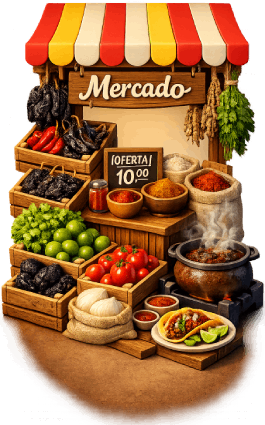
Markets bring together ingredients from across the country, reflecting Mexico City’s role as a national hub. Chiles from different regions, dried herbs, fresh produce, and specialty items coexist in dense, navigable spaces. This variety allows cooks to replicate regional dishes or experiment with combinations. The availability of diverse ingredients also prevents the city’s cuisine from becoming narrow or standardized. Instead, it remains open-ended, shaped by what arrives each day.
Knowledge Passed Through Interaction
Vendors do more than sell ingredients; they offer advice. Shoppers ask which chile suits a sauce, how long to cook a cut of meat, or which herb pairs best with a stew. These exchanges transmit practical knowledge that might otherwise disappear. The market becomes a classroom without formal instruction, where learning happens through conversation and repetition. This process reinforces shared standards while allowing for personal interpretation.
Prepared Foods Inside Markets
Many markets house small kitchens serving complete meals. These stands cater to workers and shoppers who need something quick but substantial. The food is often traditional, relying on slow-cooked dishes prepared early in the day. Eating inside a market reinforces the connection between raw ingredients and finished meals. It also blurs the line between shopping and dining, making food preparation visible rather than hidden.
Markets as Social Anchors
Beyond food, markets function as social centers. Regular visits create familiarity among vendors and customers, strengthening neighborhood ties. Conversations range from prices to local news, grounding markets in everyday life. This social role helps explain why markets remain relevant despite supermarkets and delivery services. They offer more than convenience; they provide continuity and human connection.
Home Cooking and the Rhythm of the Household
Street stalls and markets are well-noted for their presence; however, continued priority remains with home kitchens in instilling taste and fortifying habitual eating leads-in the public. Before considering specific activities, it is necessary to understand that cooking in the home is usually at its prime at a popular level, whereby domiciliary cooking concerns itself with matters of time, expense, and continuity.
Daily Meals and Practical Planning
Daily cooking in many Mexico City households is shaped by work schedules, budgets, and time constraints. Meals are often planned with flexibility in mind, favoring dishes that can be reheated, combined, or stretched across several days. Soups, stews, and rice-based dishes fit this approach because they hold flavor and texture well. This style of planning reduces waste and limits daily effort. Over time, it shapes taste expectations, encouraging a preference for familiar, reliable flavors when eating outside the home rather than constant novelty.
Family Recipes and Informal Transmission
Family recipes in Mexico City are rarely written down or measured precisely. Instead, they are learned through observation, repetition, and participation. Children absorb techniques by helping in the kitchen, adjusting quantities by feel rather than instruction. This informal transmission allows dishes to adapt to changing circumstances without losing their core identity. When people later cook or eat outside the home, these internalized standards influence what feels right. Shared expectations emerge across households, reinforcing consistency in flavor and technique throughout the city.
The Role of Weekends and Gatherings
Weekends create space for cooking that demands time and attention. Extended family meals often feature dishes that are impractical during the workweek, such as slow-cooked meats or complex sauces. These gatherings place food at the center of social life, using preparation and sharing as a way to maintain relationships. The effort involved communicates care and generosity, reinforcing cultural values around hospitality. These habits extend into public food culture, shaping expectations of warmth, abundance, and communal eating beyond the home.
Regional Techniques Within an Urban Context
Mexico City cuisine carries touches of regional influences, not mere appropriation. Motivated by migration, brings cooks, ingredients, and techniques into a nexus that allows them to interact with local factors. Understanding this process explains why some of this food feels so familiar and yet so different.
Migration and Culinary Exchange
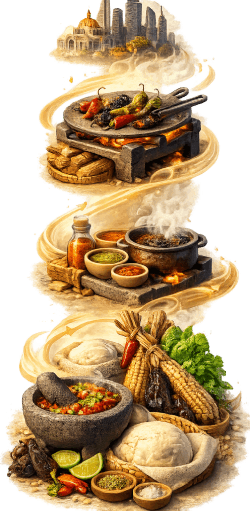
Migration has long shaped how food evolves in Mexico City. People arriving from different regions bring techniques, ingredients, and cooking habits rooted in their local traditions. Once in the city, these practices adapt to new conditions, including ingredient availability, customer expectations, and pace of service. A dish may keep its original method while shifting seasoning or presentation to suit its surroundings. This constant exchange prevents cuisines from becoming fixed or isolated. Instead, regional foodways remain active and relevant, evolving through daily use while maintaining their underlying identity.
Adaptation to Scale and Demand
Cooking in a dense city requires methods that can handle volume without sacrificing quality. Techniques developed for home kitchens must expand to meet steady, predictable demand. This often leads to changes in timing rather than flavor, such as preparing slow-cooked dishes overnight or batching components in advance. These adjustments allow traditional foods to function efficiently within urban schedules. The core methods remain intact, but their execution shifts to suit scale. In this way, tradition proves flexible, responding to practical pressures rather than resisting them.
Preservation Through Use
Culinary techniques endure in Mexico City because they continue to serve a purpose. Practices like hand-grinding sauces, fermenting doughs, or roasting chiles over open flames persist because they deliver consistent results. These methods are not preserved for symbolism alone but because they work. When alternatives offer clear advantages, they are adopted without hesitation. This selective approach ensures that tradition stays grounded in utility. By keeping what remains effective and discarding what does not, the cuisine maintains both relevance and continuity.
Flavors, Balance, and Everyday Preferences
The food in Mexico City is often referred to as bold. Yet, despite its boldness, it is never devoid of delicacy. Heat, acid, richness, and texture are juxtaposed and aligned effortlessly to a delicate offering and meal. One is also deprived in trying for the details unless one is faced with the premise of balance being learned by doing rather than stated by endless theorem.
Chiles as Structure, Not Excess
In Mexico City’s cooking, chiles are used as a structural element rather than a test of tolerance. Each variety brings specific qualities, such as sweetness, earthiness, acidity, or smoke, shaping the overall character of a dish. Cooks select chiles according to purpose, season, and balance, not just heat level. This measured use allows spice to support other ingredients instead of overpowering them. As a result, dishes remain enjoyable when eaten frequently. Chiles create depth and identity, making everyday food expressive without becoming overwhelming.
Salsas as Personal Expression
Salsas function as one of the clearest forms of personal expression in the city’s food culture. Prepared fresh and often remade throughout the day, they respond to ingredient quality, customer flow, and time. Each cook develops a distinct approach to balance, adjusting heat, acidity, and texture. Regular diners learn where to find flavors they trust or enjoy. This diversity encourages exploration without confusion. Through repeated interactions, salsas become a quiet dialogue between cook and eater, shaped by preference and familiarity.
Texture and Contrast
Texture plays a central role in how meals feel complete and satisfying. Soft tortillas, crisp vegetables, tender meats, and creamy sauces are intentionally combined to create contrast. This variety keeps simple dishes engaging without adding unnecessary complexity. Cooks pay attention to how ingredients interact, ensuring no single texture dominates. The result is food that feels balanced and considered. By layering textures thoughtfully, everyday ingredients gain depth, allowing modest meals to deliver a sense of fullness beyond flavor alone.
Restaurants and the Continuum of Eating Out
In Mexico City, restaurants occupy a variety of the meager dining situation to the more formal dining environment. They are on the continuum rather than an either in locate afar from street food or home cuisine; thus, for starters, one must read restaurants as part of a process than an end unto themselves, that is quite significant.
Casual Dining and Familiar Flavors
Casual dining restaurants in Mexico City often succeed by staying close to what people already cook and eat at home. Their purpose is not to surprise but to provide reliability, comfort, and a predictable rhythm to the meal. Menus commonly feature stews, grilled meats, rice, beans, and straightforward sides that feel familiar across generations. These places offer a seated alternative to street food without changing the underlying flavors. By echoing home cooking, casual restaurants lower social and economic barriers, making eating out feel like an extension of daily life rather than a special occasion.
Specialization and Trust
Specialization plays a major role in building long-term trust between restaurants and their customers. When an establishment focuses on a single dish or technique, it signals confidence and commitment. Over time, consistency becomes more valuable than variety. Diners return knowing the food will meet their expectations, not because the menu changes frequently. This dynamic mirrors the loyalty formed with street vendors and market cooks, where repetition builds reputation. Specialization allows cooks to refine timing, seasoning, and technique, achieving depth rather than breadth and reinforcing trust through familiarity.
Experimentation Within Limits
Restaurants that experiment tend to do so carefully, working within boundaries shaped by shared tastes and habits. Rather than discarding tradition, they adjust proportions, preparation methods, or presentation while keeping core flavors intact. A familiar dish might be lighter, more precise, or subtly reinterpreted, but it remains recognizable. This approach respects diners’ expectations and avoids alienating them. Innovation becomes incremental rather than disruptive, ensuring continuity. By balancing creativity with restraint, these restaurants contribute to the evolution of the city’s food culture without breaking its everyday relevance.
Food, Time, and the City’s Daily Rhythm
Food culture in Mexico rationalizes well with its pace. Meals are timed around work hours, transit schedules, and social actions. Before finalizing, think about that, how time determines what people eat and when.
🌅 Early Mornings and Quick Nourishment
Early mornings in Mexico City demand food that is efficient, warming, and reliable. Breakfasts are designed to fit into crowded commutes and long workdays, prioritizing nourishment over ceremony. Hot drinks and filling foods provide both energy and comfort, helping people transition into the day. Speed is essential, but meals must still satisfy enough to last several hours. This balance explains why certain breakfast foods endure over time. They meet practical needs while offering familiarity, making the first meal of the day an anchor rather than an interruption.
🕛 Midday Meals and Recovery
The afternoon meal serves as the emotional and physical center of the day. It offers a break from work, movement, and noise, allowing people to reset before continuing. Heavier dishes are common, providing sustained energy and a sense of comfort. This pause reflects long-standing habits as well as practical concerns about endurance and productivity. Whether eaten at home, in markets, or in small restaurants, the midday meal restores balance. It marks a shift in pace and reinforces food’s role in maintaining daily rhythm.
🌑 Late Nights and Informal Eating
Late-night eating responds to the city’s extended hours and social habits. Food at this time is rarely elaborate, focusing instead on warmth, richness, and satisfaction. These meals serve people returning from work, travel, or gatherings, offering closure to the day. Informality dominates, with quick service and familiar flavors taking priority. This final meal completes the daily cycle, linking nourishment to rest. Repeated night after night, late-night food helps structure time, signaling the transition from activity to recovery.
Learning to Eat the City
Mexico City’s food culture is learned gradually through repetition rather than explanation. Residents do not study menus or seek guidance; they absorb patterns by eating the same foods in the same places over time. Knowing where to eat, what to order, and when certain dishes make sense becomes a form of everyday literacy. This knowledge is practical, shared, and rarely verbalized, yet it strongly shapes behavior.
Taste education happens informally. Children learn which salsas are meant to be used sparingly, which dishes belong to specific times of day, and how much heat feels balanced rather than extreme. Adults refine these instincts through routine, adjusting preferences as work schedules, neighborhoods, or family structures change. Visitors often notice variety, but locals recognize structure beneath it.
This learned familiarity allows the food culture to function smoothly. Lines move quickly, orders are efficient, and expectations align between cook and customer. Because people understand the system, it rarely needs explanation. Eating the city becomes second nature, reinforcing continuity without resisting change.
One Common Misconception About Mexico City Food
Many tourists see Mexico City's kitchen culture in terms of famous dishes or celebrities. This is true, but only to the degree to which rendering the trivial rests upon the major. To elaborate, it is important to first define what it is not.
- It is not driven by constant innovation but by reliable repetition.
- It is not divided strictly between street and restaurant food.
- It is not uniform across neighborhoods or social groups.
✨ Why Mexico City’s Food Culture Endures
Mexico City's food culture's power lies in being able to cater to everyday needs while staying open to change. It grow spectacular or extravagant in doing so; instead, simply doing well through routine, expertise and mutual expectations. Every meal accord strengthens a series of connections between cooks, vendors, markets, and households. This interconnected fabric allows tradition to grow rather than just sit, meaning that the city's culinary culture grows and remains grounded, all the while not losing its spirit.
More Than a Menu: Food as Living Memory
Mexican cuisine in Mexico City is not a showcase of Iconic Dishes; rather, it is more about the body of daily practices spurred by lack, desire, and concern. In a sense, food suffices as an adhesive that makes people nurture themselves, bind them together, and endure. Because it must be a living tradition: it survives, adapts, and transforms due to use, and pervasive in everyday life.
El Taco es sin duda el alimento mexicano más emblemático.
— Antares Vázquez Alatorre (@AntaresVazAla) March 31, 2022
Puede ser de carne, de verduras, de frijol y hasta de sal.
La hospitalidad de muchas familias mexicanas se manifiesta frecuentemente con la frase: “¡Véngase a comer un taquito!”#DíaDelTaco pic.twitter.com/CsfOOXE1ZH